Tag Archive | "iphone"

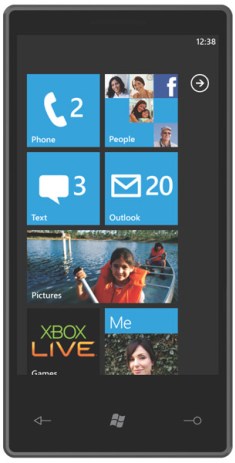
Windows Phone 7 Series Impression


Windows Mobile team has re-written its Windows Mobile OS with the 7 Series .
For the geeks out there that was looking for a “Zune Phone” that’s basically what the user interface is based off of.

Featuring different Hubs such as People,Pictures,Office,Games,Music & Video this hubs can be accessed through Dynamic  Tiles on the home-screen that updates  via online services such as Facebook & Windows Live.

The Windows Phone 7 in my opinion is not a big competition For its competitors,  iPhone OS & Android OS.

Let us Know what you think?

Leave a comment!

Popularity: 6% [?]

Posted in Cell PhonesComments

Blackberry Storm 2 planned for October 28


PRESS RELEASE:

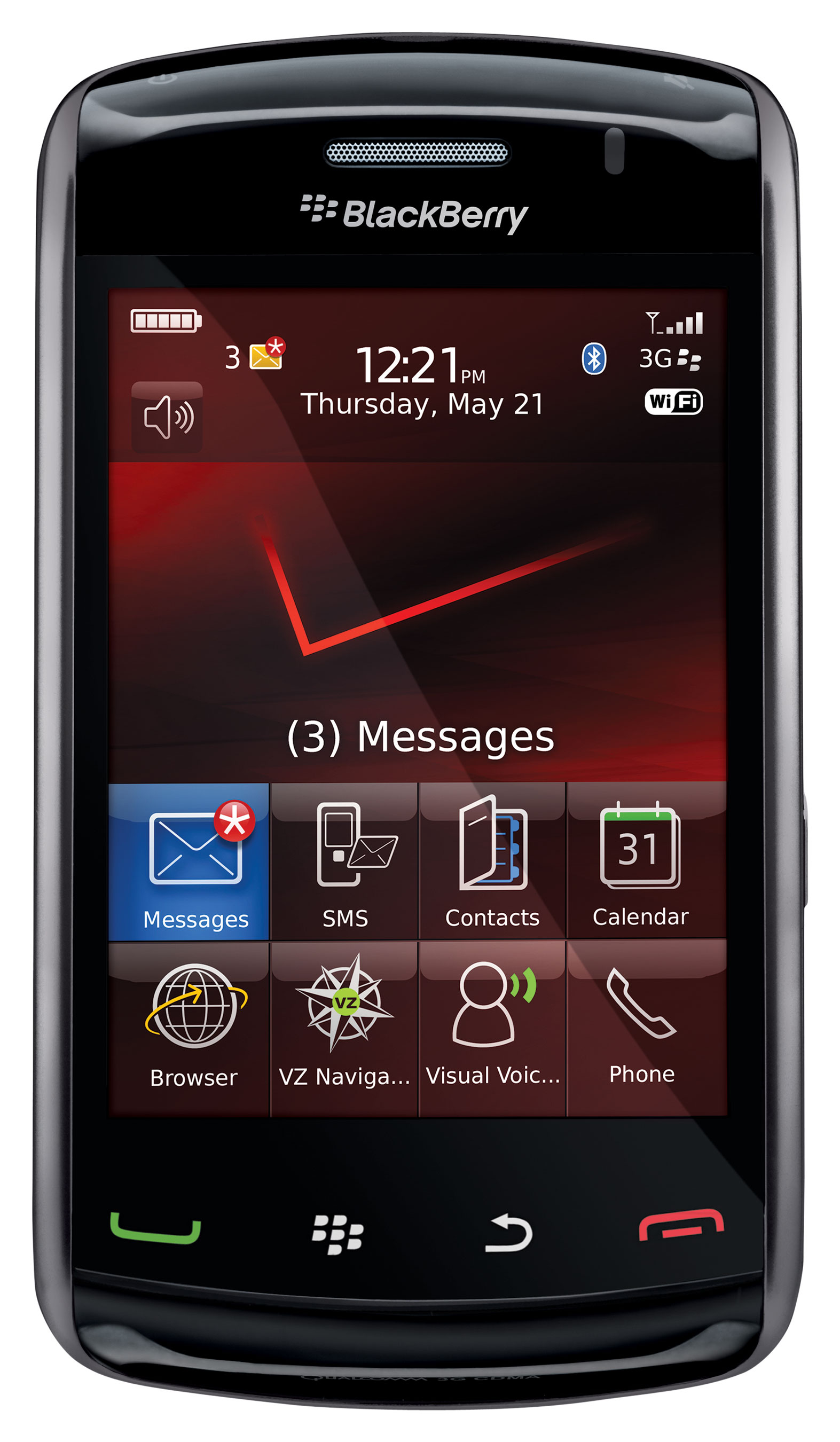
BB_Storm2_Front_Portrait_LRG-H4-Web

ASKING RIDGE, NJ, and WATERLOO, ONTARIO — Verizon Wireless and Research In Motion today announced that the BlackBerry® Storm2™ smartphone will be available in Verizon Wireless Communications stores, online at www.verizonwireless.com, and through business sales channels beginning Oct. 28. The BlackBerry Storm2 with BlackBerry® OS 5.0 evolves the BlackBerry® touchscreen platform with hundreds of hardware and software enhancements – including new SurePress™ “clickable” display technology and built-in Wi-Fi® – delivering the exceptional multimedia experience and communications capabilities customers have come to expect from their BlackBerry smartphones.

Key Features:

  • Smooth design and premium finish with sloped edges, chrome accents, glass lens and stainless steel backplate
  • Large (3.25”), dazzling high-resolution 480 x 360 display at 184 ppi
  • Capacitive touchscreen with integrated functions (Send, End, Menu, Escape) and new SurePress technology that makes clicking the display practically effortless
  • 3G and global connectivity support for making phone calls in more than 220 countries and accessing data in more than 185 countries (with more than 80 destinations in 3G)
  • Network Connectivity: EV-DO Revision A; UMTS/HSPA (2100 MHz); and quad-band EDGE/GPRS/GSM networks
  • Supports Wi-Fi (802.11 b/g)
  • 256 MB of Flash memory
  • 2 GB of onboard media storage and a microSDâ„¢/SDHD memory card slot with a 16 GB card included

Software Updates on BlackBerry Storm2:

  • Features BlackBerry OS 5.0, which includes typing accuracy and selection improvements, as well as usability and visual enhancements such as inertial scrolling, spin boxes that make it easier to set dates and times, gradient shading on buttons, and more use of animation
  • BlackBerry® Browser is improved with faster JavaScript and CSS processing as well as support for Gears and BlackBerry Widgets
  • Customers running BlackBerry® Enterprise Server 5.0 will gain the ability to set follow-up flags, manage e-mail folders, access remote files (Windows Shares), forward appointments, view calendar attachments, and more

Additional Features and Specifications:

  • 3.2 megapixel camera with autofocus, Image Stabilization (IS), flash and video recording capabilities
  • Premium and easy-to-access phone features, background noise suppression technology, loud distortion-free speakerphone and face detection (proximity sensor) that prevents accidental clicks and blanks the screen while the customer is on the phone
  • Media player for videos, pictures and music, plus support for BlackBerry Desktop Manager for both PCs and Macs, and BlackBerry® Media Sync, for easily syncing Windows Media® Player music with the smartphone*
  • 3.5 mm stereo headset jack and dedicated volume controls
  • Bluetooth® (v2.1) capable with support for Secure Simple Pairing, hands-free headsets, stereo headsets, car kits and other Bluetooth peripherals
  • Built-in GPS for maps and other location-based applications, as well as photo geotagging; and Verizon Wireless’ VZ NavigatorSM service is pre-loaded
  • V CAST Music with Rhapsody
  • Access to BlackBerry App Worldâ„¢, featuring a broad and growing catalog of third-party mobile applications developed specifically for BlackBerry smartphones, with categories including games, entertainment, IM and social networking, news, weather, productivity and more
  • Support for Verizon Wireless’ Mobile Broadband Connect tethering service
  • Removable, rechargeable 1400 mAhr battery that provides up to 5.5 hours of talk time or up to 11.2 days of standby time

Pricing and Availability:

  • The BlackBerry Storm2 smartphone is available beginning Oct. 28 for $179.99 after a $100 mail-in rebate with a new two-year customer agreement on a voice plan with an Email and Web feature or an Email and Web for BlackBerry plan. Customers will receive the mail-in rebate in the form of a debit card; upon receipt, customers may use the card as cash anywhere debit cards are accepted. Data plans for the BlackBerry Storm2 smartphone begin at $29.99 when added to any Nationwide voice plan.
  • New Operating System for Existing BlackBerry Storm Customers
  • Existing BlackBerry Storm customers will be able to update their handsets to the new BlackBerry OS 5.0 software via Web software load (www.blackberry.com/update), BlackBerry Desktop Manager, or from Verizon Wireless’ download site (www.verizonwireless.com/storm). The software is available today.

Popularity: 12% [?]

Posted in Cell PhonesComments

Sprint Palm Pixi price and release date announced: $99.99 starting November 15


Palm-Pixi-Sprint-99

OVERLAND PARK, Kan  –Sprint today announced Nov. 15 as the first day of nationwide availability for Palm® Pixiâ„¢, exclusively available on America’s most dependable 3G network1 from Sprint, It will cost just $99.99 with a two-year service agreement, after a $50 instant rebate and $100 mail-in rebate and be available at Sprint stores, online at www.sprint.com, through telesales at 1-800-SPRINT1, and at Best Buy, RadioShack and select Wal-Mart stores.

“We are excited to offer the new Palm Pixi to our customers in time for the holiday season, and it’s a great addition to Sprint’s industry-leading device portfolio,” said Kevin Packingham, senior vice president – Product Development, Sprint. “Simply put, this phone is fun and easy to use; with its multi-touch screen and full QWERTY keyboard, it’s a great device for messaging and social networking at a price everyone can enjoy, and delivers so many of the great features people love about Palm Pre™ in a fantastic new form factor, making it a huge hit for consumers.”

Running the Palm webOSâ„¢ mobile platform, Palm Pixi lets the user keep multiple activities open and move easily between them, like flipping through a deck of cards, using natural gestures. This allows for easy movement between messaging and email or searching the Web while listening to music, and items are rearranged simply by dragging them. Universal search also makes finding things easy, providing results from both the device and the Web.

Palm webOS brings together the user’s most important information from their phone, at work or on the Web into one logical view. In addition to linking information from Google™, Facebook®, Microsoft® Exchange ActiveSync® and LinkedIn®, Palm Pixi adds Yahoo!® integration to Palm Synergy™3. Palm Synergy offers:

* Linked contacts – A single view that links contacts from a variety of sources, so accessing them is easier than ever.
* Layered calendars – Calendars can be seen on their own or layered together in a single view, combining work, family, friends, sports teams or other interests, and the user can toggle to look at one calendar at a time, or see them all at a glance.
* Combined messaging – See all the conversations with the same person in a chat-style view, including MMS, even if it started in IM and switched to reply with text messaging. The user can also see who’s active in a buddy list right from contacts or email, and start a new conversation with just one touch.

A new Facebook application will be available with Palm Pixi, so users can see and comment on all the latest news from friends and easily update their status. Palm Pixi features an exposed full QWERTY keyboard, multi-touch screen and a durable, removable rubberized back cover.

While Palm Pixi comes with a charger included in the box, Palm recently introduced the Touchstoneâ„¢ charging dock, the first inductive charging solution for phones. Touchstone, along with the Touchstone compatible back cover (both sold separately), allows Palm Pixi to be set on top of the dock without worrying about connection, orientation or fit. The device remains active while charging, allowing access to the touch screen, movies or video, or the speakerphone option. Touchstone is available in Sprint stores nationwide for $79.99 and includes a Touchstone charger and USB wall charger. The Pixi Touchstone back cover is also available for $19.99 (plus taxes).

Palm Pixi requires activation on a pricing plan including unlimited data, such as Sprint’s Everything Data plans with Any Mobile, AnytimeSM, which give customers unlimited mobile calling on the Sprint network to and from any U.S. wireless carrier, unlimited nationwide texting, email, Web browsing and much more, starting at just $69.99. The Simply EverythingSM plan from Sprint offers a truly unlimited experience for only $99.99 per month, a savings of $1,200 over two years versus a comparable AT&T iPhone® plan4. (All price plans exclude surcharges and taxes. Other exclusions apply.)

Customers who subscribe to an Everything Data plan are also automatically enrolled in Sprint Premier, the industry-leading loyalty program. The Premier program provides customers with great benefits such as annual upgrades, discounts on accessories, anniversary rewards, rate plan checkups and “first to know” information about the latest at Sprint.

Palm Pixi will take advantage of the Sprint Mobile Broadband Network (inclusive of data roaming), which reaches more than 269 million people, 18,652 cities and 1,838 airports. The Sprint Networks (inclusive of data roaming) have more than twice the coverage of AT&T’s current 3G network and more than 15 times the coverage of T-Mobile’s current 3G network, both based on square miles5.

Sprint is also the only wireless carrier to offer Ready Now with trained retail associates to work one-on-one with customers to personalize their Palm Pixi, set up features and demonstrate how it works before the customer leaves the store. Customers have the choice of sitting down with a Sprint retail associate at the time of purchase or they can schedule an appointment for a later time at www.sprint.com/storelocator.

Application developers will have a chance to learn more about Palm webOS at Sprint’s ninth annual developer conference beginning today in Santa Clara, Calif. The Sprint Open Developer Conference is open to all developers and will feature information through speaker sessions and coding camps on developing applications for a range of platforms, including webOS. Palm is a premier sponsor of the conference, and Ben Galbraith and Dion Almaer, directors of Developer Relations for Palm, will be giving a keynote address in addition to running several breakout sessions and coding camps focusing on the webOS platform. For details, go to http://developer.sprint.com/devcon2009.

Customers who would like to register to receive additional information about Palm Pixi can register at www.palm.com/pixi.

Popularity: 7% [?]

Posted in Cell PhonesComments

Apple adds video camera to iPod nano


overview_hero1_20090909Apple announced a new iPod nano with a built-in camera on Wednesday at the “Rock and Roll” event in San Francisco. Apple CEO Steve Jobs introduced the new model by citing the popularity of pocket flash memory-based video cameras like those from Flip and Kodak. “This market’s really exploding,” said Jobs, “and we want to get in on this.”

The new iPod nano comes in 8GB and 16GB models, each of which incorporates a video camera and microphone on the back of the unit, as well as a built-in speaker. The video camera shoots H.264 VGA video—640 by 480 pixels—at up to 30 frames per second with AAC audio in either portrait or landscape modes. It also features 15 special effects that can be applied in real time: Sepia, Black and White, X-Ray, Film Grain, Thermal, Security Cam, Cyborg, Bulge, Kaleido, Motion Blur, Mirror, Light Tunnel, Dent, Stretch, and Twirl. The nano can display video or sync it back to your computer, where you can easily upload the clip to YouTube, Facebook, MobileMe, or share it via e-mail. The microphone can also be used with the nano’s voice recording feature.

In addition, the nano now has VoiceOver support, which provides audible navigation cues in 20 languages, and the new Genius Mixes feature, which creates up to 12 endless playlists of music based on your existing library. There’s also a built-in pedometer which can measure your steps and sync the information with the Nike+ service and, in a first for an iPod, an FM radio tuner. The radio tuner includes support for live pause, which allows users to pause a live program and resume it later, and iTunes Tagging, which lets listeners tag radio songs they like and then preview and optionally purchase the song next time they sync with iTunes.

Other than the camera, the physical form factor of the nano remains mostly unchanged, although it now features a larger 2.2-inch, 240-by-376-pixel, display and comes in nine colors: silver, black, purple, blue, green, orange, yellow, (PRODUCT) RED and pink. The 8GB model runs for $149 and the 16GB for $179 (a discount from the previous nano, which cost $199). Both new models are shipping today.

The new nano requires Mac OS X 10.4.11 or later as well as iTunes 9. iPhoto 6.0.6 or later is recommended for Tiger users and iPhoto ‘09 for Leopard or Snow Leopard users. Windows users need Windows Vista or Windows XP Home or Professional with Service Pack 3 or later as well as iTunes 9.

Source [MACWORLD]

Popularity: 8% [?]

Posted in Features, Portable Audio/ VideoComments

Camera-equipped nano highlights ; Apple’s iPod changes


The iPod nano will now feature a built-in camera, as Apple updated its iPod line as part of a music-focused press event in San Francisco on Wednesday

The new iPod comes in 8GB and 16GB models, priced at $149 and $179, respectively. The music players now feature a video camera and microphone on the back of the device along with a built-in speaker. The nano can display video or sync it back to your computer for uploading to YouTube.

According to Apple CEO Steve Jobs—making his first public appearance at an Apple event since returning from a six-month medical leave—the company added the camera to the nano line to capitalize on the popularity of pocket-sized flash-based video cameras.

Get more details on the new iPod nano

The nano was just one of the changes Apple introduced to its iPod line on Wednesday. The company also cut the price on its entry-level 8GB iPod touch to $199; previously, that model sold for $229. In addition, Apple boosted the capacity on the touch to 64GB. The 32GB and 64GB models are now 50-percent faster and feature support for the Open GL|ES 2.0 graphics API.

Despite speculation that Apple might discontinue the iPod classic—the last remaining hard drive-based device in its iPod line—that model remains with an expanded capacity. The iPod classic now features 160GB of storage at the same price as before, $249.

As for the iPod shuffle, it comes in new colors. The 2GB and 4GB models sell for $59 and $79, respectively; a special edition 4GB model made of stainless steel costs $99.

iPod talk dominated the second half of Apple’s Wednesday event, but the company also had software news. A new version of the iTunes is now available, featuring Genius Mixes for creating recommended playlists of music and movies.

Other features in iTunes 9 include Home Sharing, which brings iTunes synchronization to up to five authorized computers and a new interface for managing iPhone and iPod touch applications. iTunes 9 also introduces a number of improvements to Apple’s online iTunes Store, including new artist pages with more visual material added.

Finally, Apple released a minor update to its iPhone software. iPhone 3.1 rolls out some bug fixes in addition to extending the Genius media-recommendation algorithm to recommend iPhone apps to users. The update also beefs up the iPhone OS’s ringtone capabilities.

Source : [MACWORLD]

Popularity: 6% [?]

Posted in Portable Audio/ VideoComments

iPod Camera Delays Possible


iPodTouch2Technical difficulties could delay the camera-equipped iPods widely expected at the Apple event on Wednesday, according to sources cited by AppleInsider. The unnamed source says that Apple is facing problems with the production of new iPods, more exactly with the camera hardware.

apple ipod camera
Apple’s iPod family
Apple is expected to introduce camera-equipped iPods at the special event, although, as usual, Apple did not disclose any information about what will be unveiled. However, photos of third-party iPod touch and nano cases sporting a camera hole have been doing the rounds online for a few months now — which led us to believe that Apple is indeed putting cameras into iPods.

But according to a report from AppleInsider, not everything is rosy in Apple land, because the Cupertino company is having technical problems putting cameras into iPods. Hardmac carries a similar report, which suggests the problem lies with the iPod touch camera module. Both publications say that this could mean the new iPods won’t hit the market this September.

If all the speculation about photo-equipped iPods is true, then we will most likely see 3.2-megapixel-camera-fitted iPods — basically the same image sensors found in the current generation iPhone 3GS. The iPhone 3GS’s camera features autofocus and video recording capabilities, but no flash is present. The software on the 3GS can also trim movies captured with the phone’s camera and upload them on YouTube.

The iPod classic, Apple’s only remaining hard-drive based music player, is not expected to get a camera upgrade. On the contrary, rumors suggest that Apple will drop the hard-drive based iPods, in favor of an all-flash memory lineup, just like Microsoft is doing with its current line of Zune players.

Source [ PCWORLD]

Popularity: 7% [?]

Posted in News, Portable Audio/ VideoComments

AT&T to Launch MMS for iPhone 3G, 3GS


Iphone 3GsAT&T Inc. today finally set a firm date of Sept. 25 for making multimedia messaging service (MMS) available for the iPhone 3G and iPhone 3GS.

The carrier had said at the launch of iPhone 3GS in June that MMS capability would be available by the end of the summer. AT&T went beyond that promise by a few days since autumn begins on Sept. 22.

The MMS will be enabled through a software update that day. A spokeswoman said the MMS service is available through a user’s data plan at no extra cost.


The carrier said in an online note that it had to prepare the network for the “record volumes” of MMS traffic expected from iPhone users. The company wants to “ensure an excellent experience from Day One.”

AT&T also said in the online note to customers, “We appreciate your patience as we work toward that end.”

The carrier also cited an “explosion of traffic” with smartphone usage, and reported wireless usage growth of 350% year-over-year for the past two years. “We want you to know that we’re working relentlessly to innovate and invest in our network to anticipate this growth in usage and to stay ahead of the anticipated growth in data demand, new devices and applications for years go come,” the note stated.

When Apple announced the 3GS on June 8, crowds jeered when it was mentioned that AT&T would not immediately have MMS available on the shipment date. The delay brought plenty of customer complaints and helped fuel concerns over the value of a carrier having an exclusive deal for a smartphone.

For AT&T, missing the end-of-summer target by a few days was justified by the need to get the network ready. When asked why that target date was missed, a spokeswoman responded in an e-mail: “It was important to us to give our customers a positive experience from day one. We took the time necessary to make sure our network is ready to handle what we expect will be a record volume of MMS traffic. We appreciate our customers’ patience and hope they’ll understand our desire to get it right from the start.”

Popularity: 8% [?]

Posted in Cell PhonesComments

Apple iPhone Nano Patent


29-patent-2A belated US Patent via an Australian filing mysteriously surfaced this month revealing a stunning nano-phone concept in development at Apple.(check pics out below) The design involves a very sophisticated yet complicated dual-surface user interface. The full face-side of this device will be nothing more than a display, much like the iPhone is today, while the back-side will be primarily dominated by a force-sensitive touch based surface. Your fingers, which act as a cursor, control the face-side UI by the back-side etched controls. The dramatic design will offer users a variety of interfaces or modes to work with including one for a phone,text messaging, a traditional iPod, a camera mode and more. The design may also, according to Apple, simply offer consumers with a dual-sided display option in lieu of a force sensitive controller surface. On one hand, the design appears to be nothing shy of being revolutionary once again. On the other, the concept seems to be overly complicated. I’m sure that once we see it, it’ll all make sense. Yet until that time it arrives, I think that Apple’s design could be hotly debated.

Thanks! BGR

Popularity: 6% [?]

Posted in NewsComments

Apple To Allow Augmented Reality Apps On iPhone OS 3.1 Update In September


Picture-161-300x173The L.A. Times has reported that Apple will finally allow applications that use new augmented reality technology in the app store then their OS 3.1 update his iTunes in September.  Augmented reality applications apply different types of media over a real time image using the iPhone 3GS’s camera.  A great example of this new technology will be an app called TwittaRound, which will allow users to point their camera in a certain direction, geo-locate and visually position tweets sent from the app on the live image from the camera using the built in compass.

This is just one feature of the new iPhone 3.1 OS update.  The update is said to contain many bug fixes and will be the first update since the release of the iPhone 3GS.  Some new features that have been found in the beta include improved, “non destructive” video editing, vibrating icons when they are moved, and bluetooth voice control.  Developers have also reported that the MMS icon has appeared in the new beta, and a select few have been able to successfully send and receive MMS messages.  One of the problems that users have been talking about that has been said to have a solution in the new update is an overheating issue.

If you are a developer and have seen any other new features in the iPhone 3.1 OS beta, or if you have seen any other improvements or bug fixes, send me an e-mail at Dustin@thegadget411.com and let us know about it!

Popularity: 7% [?]

Posted in Cell PhonesComments

Using an iPhone as a high-quality image projector


Kirstindemonstrating_540x359Thanks Cnet

Imagine you’re on a camping trip with your family, and your kids are bored. They want to watch a movie, but you forgot your laptop at home. Hopeless? Not at all.

You pull out your fifth-generation iPhone–yes, this is a story about future technology–power it up, aim it at the wall of the tent, and start projecting their favorite film there.

This is one of the many potential promises of a new microdisplay technology from Displaytech, a recently acquired division of Boise-based Micron. Known as FLCOS, or fast liquid crystal on silicon, the technology is designed to make it possible to project, from a relatively small form factor device, and with high image quality and vibrant colors, just about anything you’d want, be it a Disney flick or a complex PowerPoint presentation

Today, the technology is still in its prototype stage, and when I visited Micron here this week as part of Road Trip 2009, I was shown a demonstration in which things like YouTube movies or ESPN clips stored on an iPhone were projected onto a screen via a small device with a tiny 3M projection engine in it.

Even that was pretty cool, because the little device probably had about the same volume as a deck of cards, and the image quality–in a very bright room–was fairly good, particularly when it came to showing text-based slides. But the most exciting thing to me about the technology is the promise that by late 2010 or early 2011, there’s a good chance that the thumbnail sized chip behind the microdisplay could begin to be embedded in commercially available smartphones, like the iPhone.

And that could mean that not only would it be possible to watch a movie any time and anywhere, as can already be done on many small devices, but that it would no longer be a solo experience. Instead, using something like an iPhone, it would be possible to share a movie with a room full of people.

The idea behind the technology is that FLCOS microdisplays can mix color over time, blending reds, greens and blues in very quick sequence, Eric Boles, Micron’s director of marketing services, explained to me. The human eye turns such color mixing into full color, meaning that FLCOS obviates any kind of color filtering.

Right now, the projection engine behind the technology is about an inch-and-a-half long and very power efficient, Boles said. Just 1.1 watts can produced ten lumens.

For now, no mobile phone makers have gotten on board with Micron’s microdisplay technology, in part because the chips may still be too expensive, and because smart phones may not yet have the power to allocate to something like FLCOS. But because the projection technology is on a chip, it is likely to follow the traditional silicon curves, Boles said, meaning that the chips will probably get smaller, faster and cheaper quickly.

Micron also faces an interesting marketing question: How to market the chips. The company doesn’t plan on marketing FLCOS directly to consumers, but rather will work with consumer electronics companies to create the kinds of products they want. In the short term, Boles said, the most obvious market may well be businesspeople who could easily find themselves unable to resist a small device that would let them project a presentation on any surface any time they want.

Other exciting advances–before the microdisplay technology makes its way to the iPhone–could include adding wireless to the device so that it can retrieve content without having to be physically tethered to the content source.

And it’s also exciting to imagine the possible roster of things that could be used as projection screens. Boles recalled a visit to a Mexican restaurant at some point recently where one of the prototype devices was used to project onto a tortilla.

There are, of course, other companies working on similar products, but the folks at Micron think they’re onto a special approach to tiny projectors because the microdisplays are all-digital. And that means that Micron may be the only company able to embed such technology on a chip.

Popularity: 3% [?]

Posted in Cell PhonesComments

Page 1 of 3123
  • Sign Up For Tech Updates!
    * indicates required

    Powered by MailChimp

  • Switch to our mobile site