Apple announced a new iPod nano with a built-in camera on Wednesday at the “Rock and Roll†event in San Francisco. Apple CEO Steve Jobs introduced the new model by citing the popularity of pocket flash memory-based video cameras like those from Flip and Kodak. “This market’s really exploding,†said Jobs, “and we want to get in on this.â€
The new iPod nano comes in 8GB and 16GB models, each of which incorporates a video camera and microphone on the back of the unit, as well as a built-in speaker. The video camera shoots H.264 VGA video—640 by 480 pixels—at up to 30 frames per second with AAC audio in either portrait or landscape modes. It also features 15 special effects that can be applied in real time: Sepia, Black and White, X-Ray, Film Grain, Thermal, Security Cam, Cyborg, Bulge, Kaleido, Motion Blur, Mirror, Light Tunnel, Dent, Stretch, and Twirl. The nano can display video or sync it back to your computer, where you can easily upload the clip to YouTube, Facebook, MobileMe, or share it via e-mail. The microphone can also be used with the nano’s voice recording feature.
In addition, the nano now has VoiceOver support, which provides audible navigation cues in 20 languages, and the new Genius Mixes feature, which creates up to 12 endless playlists of music based on your existing library. There’s also a built-in pedometer which can measure your steps and sync the information with the Nike+ service and, in a first for an iPod, an FM radio tuner. The radio tuner includes support for live pause, which allows users to pause a live program and resume it later, and iTunes Tagging, which lets listeners tag radio songs they like and then preview and optionally purchase the song next time they sync with iTunes.
Other than the camera, the physical form factor of the nano remains mostly unchanged, although it now features a larger 2.2-inch, 240-by-376-pixel, display and comes in nine colors: silver, black, purple, blue, green, orange, yellow, (PRODUCT) RED and pink. The 8GB model runs for $149 and the 16GB for $179 (a discount from the previous nano, which cost $199). Both new models are shipping today.
The new nano requires Mac OS X 10.4.11 or later as well as iTunes 9. iPhoto 6.0.6 or later is recommended for Tiger users and iPhoto ’09 for Leopard or Snow Leopard users. Windows users need Windows Vista or Windows XP Home or Professional with Service Pack 3 or later as well as iTunes 9.
The iPod nano will now feature a built-in camera, as Apple updated its iPod line as part of a music-focused press event in San Francisco on Wednesday
The new iPod comes in 8GB and 16GB models, priced at $149 and $179, respectively. The music players now feature a video camera and microphone on the back of the device along with a built-in speaker. The nano can display video or sync it back to your computer for uploading to YouTube.
According to Apple CEO Steve Jobs—making his first public appearance at an Apple event since returning from a six-month medical leave—the company added the camera to the nano line to capitalize on the popularity of pocket-sized flash-based video cameras.
The nano was just one of the changes Apple introduced to its iPod line on Wednesday. The company also cut the price on its entry-level 8GB iPod touch to $199; previously, that model sold for $229. In addition, Apple boosted the capacity on the touch to 64GB. The 32GB and 64GB models are now 50-percent faster and feature support for the Open GL|ES 2.0 graphics API.
Despite speculation that Apple might discontinue the iPod classic—the last remaining hard drive-based device in its iPod line—that model remains with an expanded capacity. The iPod classic now features 160GB of storage at the same price as before, $249.
As for the iPod shuffle, it comes in new colors. The 2GB and 4GB models sell for $59 and $79, respectively; a special edition 4GB model made of stainless steel costs $99.
iPod talk dominated the second half of Apple’s Wednesday event, but the company also had software news. A new version of the iTunes is now available, featuring Genius Mixes for creating recommended playlists of music and movies.
Other features in iTunes 9 include Home Sharing, which brings iTunes synchronization to up to five authorized computers and a new interface for managing iPhone and iPod touch applications. iTunes 9 also introduces a number of improvements to Apple’s online iTunes Store, including new artist pages with more visual material added.
Finally, Apple released a minor update to its iPhone software. iPhone 3.1 rolls out some bug fixes in addition to extending the Genius media-recommendation algorithm to recommend iPhone apps to users. The update also beefs up the iPhone OS’s ringtone capabilities.
Technical difficulties could delay the camera-equipped iPods widely expected at the Apple event on Wednesday, according to sources cited by AppleInsider. The unnamed source says that Apple is facing problems with the production of new iPods, more exactly with the camera hardware.
apple ipod camera
Apple’s iPod family
Apple is expected to introduce camera-equipped iPods at the special event, although, as usual, Apple did not disclose any information about what will be unveiled. However, photos of third-party iPod touch and nano cases sporting a camera hole have been doing the rounds online for a few months now — which led us to believe that Apple is indeed putting cameras into iPods.
But according to a report from AppleInsider, not everything is rosy in Apple land, because the Cupertino company is having technical problems putting cameras into iPods. Hardmac carries a similar report, which suggests the problem lies with the iPod touch camera module. Both publications say that this could mean the new iPods won’t hit the market this September.
If all the speculation about photo-equipped iPods is true, then we will most likely see 3.2-megapixel-camera-fitted iPods — basically the same image sensors found in the current generation iPhone 3GS. The iPhone 3GS’s camera features autofocus and video recording capabilities, but no flash is present. The software on the 3GS can also trim movies captured with the phone’s camera and upload them on YouTube.
The iPod classic, Apple’s only remaining hard-drive based music player, is not expected to get a camera upgrade. On the contrary, rumors suggest that Apple will drop the hard-drive based iPods, in favor of an all-flash memory lineup, just like Microsoft is doing with its current line of Zune players.
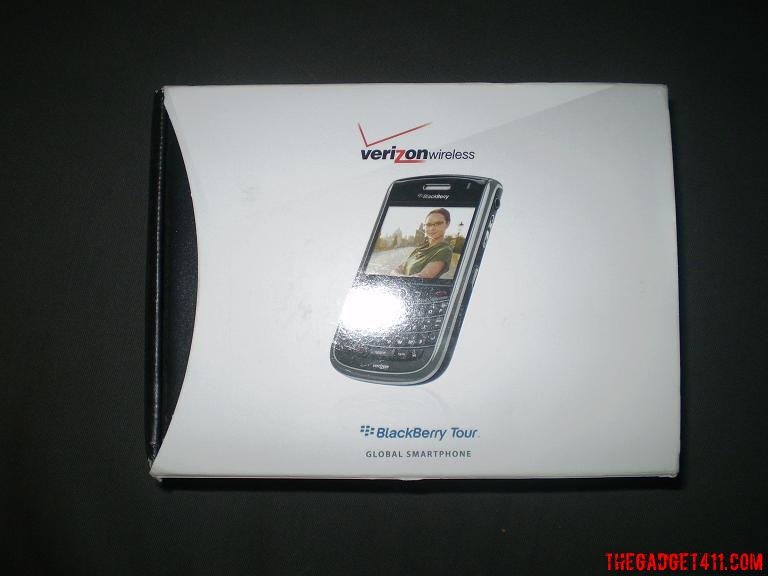
The great people at Verizon has Provided us with this one.
The RIM Blackberry Tour (9630) comes ready to use with 256mb of onboard memory with a upgradable Micro SD slot. With its 480 x 360 pixel screen it compliments the 3.2 megapixel camera/video well.
When taking this product out the box i was very surprised with the weight and how slim the phone was. The internet on this thing was amazing! Verizon 3g really does get the job done.Texting and Emailing couldnt have been easier,with the qwerty board, and the red message indicator light on the front.
The Scroll wheel on the front could not have made navigation on this easier.
On the the left side of the device is a customizeable button which is defaulted as Voice Dailing on the right side is volume up and down, and another customizable button which is defaulted as Camera. Also on the right side is a 3.5mm headphone jack for quick hookup with your favorite headphones.
For full details of this phone check out the verizon site . The blackberry 9630 tour comes in two models one with the camera , and one without, and is $269.99 with a 2 year contract. Check out the full specs, and photos below!
Size (L x W x D): 112 x 62 x 14.2 mm Weight: 130 grams Memory: 256 MB internal Flash memory Expandable Memory: microSD located under the battery door cover Battery: 1400 mAh removable/rechargeable cryptographic lithium cell Battery Life: TBD Keyboard: 35 key backlit QWERTY Display: High resolution HVGA 480×360 pixel Camera: 3.2 MP camera, flash auto focus GPS: Assisted, autonomous and simultaneous GPS enabled with preloaded BlackBerry Application for e911 capabilities Media Player: Video format support MPEG4; Audio format support MP3, AAC AAC+ etc Bluetooth: Bluetooth V2.0; mono/stereo headset, hands-free, PBAP Headset: 3.5mm stereo headset capable USB Port: Enables charging and high-spead data synchronization via USB “A†to micro USB “B†cable Network Support: Quad-band 850/900/1800/1900MHz
GSM/GPRS/EDGE networks
Single-band: 2100 MHz
UMTS/HSPA networks
Dual-Band: 800/1900 MHz
CDMA/EVDO Rev A networks
Nikon revealed the details of its flagship camera recently. The new D3X DSLR boasts a maximum resolution of 24.5MP. If you have ever thought to yourself ‘I would love to be able to take a picture of my dog that I could put on a billboard.’ this is the camera for you. It has all of the features you expect in a high end camera. Live view and a peppy 5 fps continuous shooting speed are among the many.
There are different classes of cameras. Consumer level are also known as point and shoots. They take care of focus and adjustments for you. You have no/few options for adjustments with this class. Then there is Prosumer. This is the class that many people go for. You can adjust some features with this class but you are still restricted. You do not have complete control. Then there is the Professional class of camera. You can control every aspect of the shot. You have more options on these cameras than your washer and dryer combined. This camera is so far into the Professional Class that it is merging into its own. What would we call that class? Pro-Awesome maybe?
Go to the Nikon D3X site for all of the details. Oh and by the way. If you would like to own one of these fine machines it will only cost you $8,000.00. Come on, think of how much money you could get for the awesome pictures you would take… or not.